

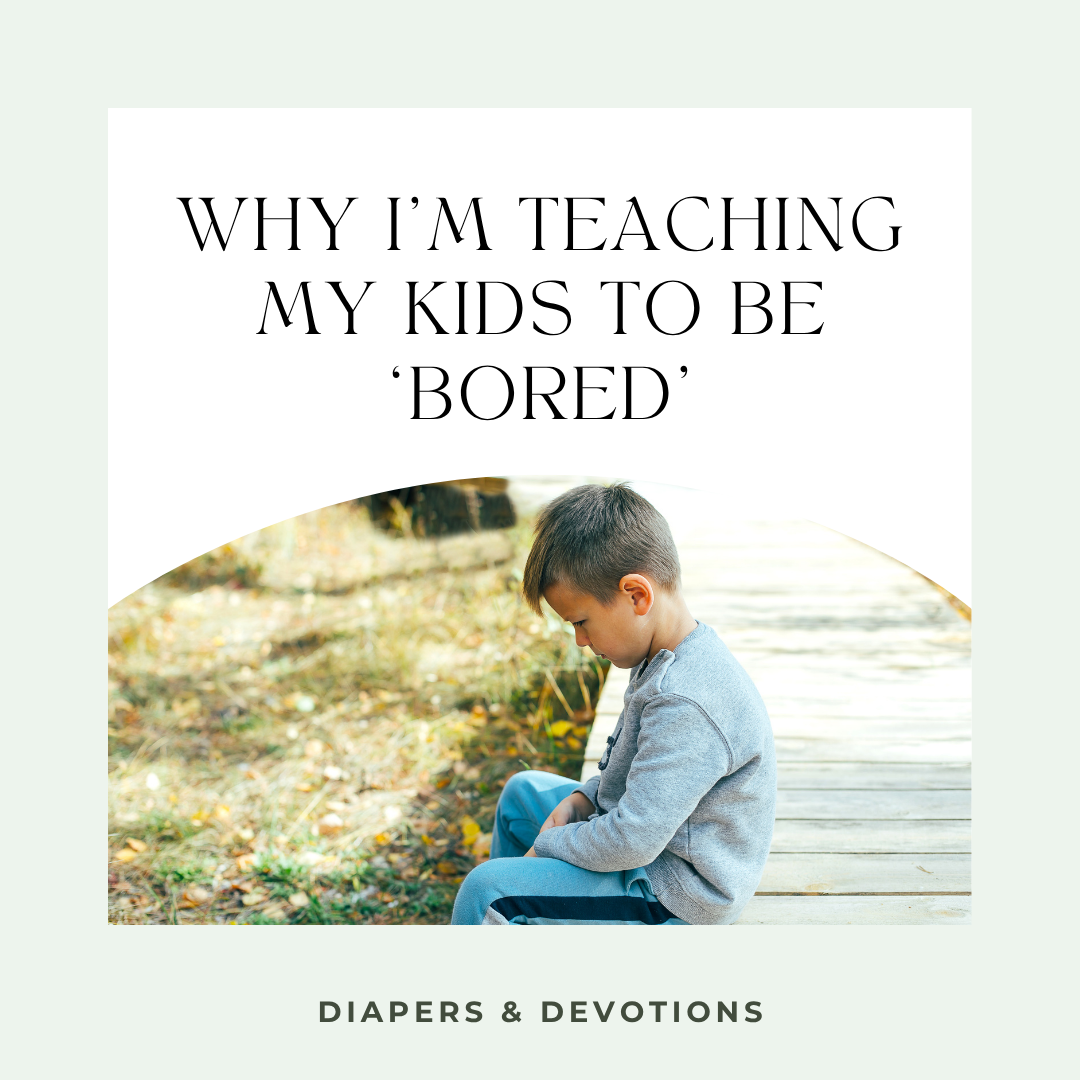
“I’m bored.”
Those two little words used to make me anxious. I’d rush to pull out a puzzle, suggest a game, or scramble for a Pinterest activity that could rescue the day. But lately, I’ve changed course. I’m no longer trying to fill every quiet moment. Instead, I’m leaning into a new rhythm: teaching kids to be bored.
In a world overflowing with screens, activities, and instant gratification, boredom isn’t something to fear—it’s something to welcome.
Why Teaching Kids to Be Bored Matters
We live in an age where constant stimulation is expected. Our phones never stop buzzing. Tablets have apps for every interest. Streaming services autoplay the next episode before the credits even roll. With so much entertainment at their fingertips, our kids rarely experience the gift of being still.
But here’s what I’ve discovered: teaching kids to be bored isn’t neglect. It’s preparation.
When children aren’t constantly entertained, they’re forced to think, create, and explore. They rediscover how to play without prompts. They make up games. They build forts. They draw, write, question, and pretend. And it’s in these unscripted moments that some of the most beautiful childhood magic happens.
Boredom is the Breeding Ground for Creativity
I’ve seen it happen. When I don’t immediately jump in to “fix” their boredom, my kids eventually find their way. One builds an elaborate Lego city. Another draws an entire zoo of imaginary animals. They’ve made musical instruments out of recycling, invented dance routines, and written comic books—all because they had time to be bored.
Teaching kids to be bored allows their creativity to thrive. Without a preplanned schedule or adult-led activity, they must dig into their own imagination. And that’s a skill worth nurturing.
The Character That Boredom Builds
Boredom isn’t just about play—it’s about patience, resilience, and self-control. Our culture often avoids any form of discomfort, but boredom is discomfort. It’s the itch to do something… without a clear idea of what that “something” should be.
And here’s the truth: our kids need that. They need to practice waiting. They need to experience that unsettled feeling and learn how to move through it in healthy ways.
By teaching kids to be bored, we’re giving them a chance to grow in perseverance. We’re helping them build emotional muscles they’ll need as teens and adults. They won’t always have instant entertainment or gratification. Sometimes, they’ll have to wait on God. Sit with their feelings. Be still in uncertainty. Boredom prepares them for those moments.
Boredom Creates Space to Hear from God
Jesus often withdrew to quiet places to pray (Luke 5:16). He didn’t avoid solitude—He chose it. And while we may not picture our noisy homes as “quiet places,” boredom does offer spiritual opportunity.
When we stop rushing to fill every gap with noise, we create silence. In this silence, we give our children room to hear God’s whisper. Stillness becomes a spiritual training ground. And if we never let them feel bored, how will they ever feel the nudge of the Holy Spirit?
Teaching kids to be bored opens their hearts to rest, reflection, and relationship with God.
Practical Ways We’re Teaching Kids to Be Bored at Home
So what does this actually look like in our home? I’m not abandoning my kids to wander aimlessly every afternoon. But I am creating space—intentionally—for boredom to do its good work.
Here’s how:
- No instant rescue. When someone says, “I’m bored,” I smile and say, “That’s okay. You’ll figure something out.” And they usually do.
- Open-ended options. We keep things like blocks, art supplies, dress-up clothes, and books easily accessible so creativity can spark naturally.
- Unstructured time. I protect chunks of our day or weekend where we don’t have plans. We need that breathing room.
- Nature play. Even just being outside with nothing but dirt, sticks, and imagination works wonders.
- Modeling it. I don’t reach for my phone during every pause. Sometimes I just sit on the porch with coffee or fold laundry slowly, showing that quiet moments are okay.
These small shifts have helped all of us. My children are learning how to fill their time without me doing it for them—and I’m learning to let them.
Bored Doesn’t Mean Bad
It’s tempting to view boredom as a parenting failure. As if a bored child means we’ve dropped the ball. But I’m convinced that boredom is not a problem—it’s a practice.
Teaching kids to be bored is countercultural. It resists the lie that “busy equals valuable.” It pushes back against a world that says entertainment is a right. It teaches our children that life isn’t always loud, fast, or fun—and that’s okay.
It also gives us all a moment to pause.
To be present.
To let our minds wander and our souls settle.
Why I’m Okay With the Whining
Yes, there’s some pushback. My kids don’t always love being bored. There are sighs, eye rolls, and dramatic flops onto the floor. But I don’t panic anymore. I see those moments as part of the process.
Eventually, they push through. They get up. They discover something new. They learn that they are capable of entertaining themselves—and that I don’t exist to do it for them.
That’s not cruel. That’s kindness. That’s preparing them for a life where their worth isn’t found in constant motion or noise.
Final Thoughts: The Gift of Boredom
If your child tells you they’re bored today, you don’t have to fix it. You can sit in it. Smile at it. Allow it.
Because boredom isn’t a failure. It’s a teacher. It’s one of the best tools we have for raising thoughtful and creative kids. It helps in nurturing spiritually aware kids in a world that never stops spinning.
Mama, you’re not being lazy or careless by teaching kids to be bored. You’re being intentional. You’re creating space for imagination, patience, problem-solving, and prayer.
So next time the whining starts, try saying, “Good. That means your brain is about to do something wonderful.”
And then wait for it—because it will.
More Like This
Back to School, Not Back to Chaos: Rhythms for a Peaceful Home
50 Screen-Free Activities For Kids
